
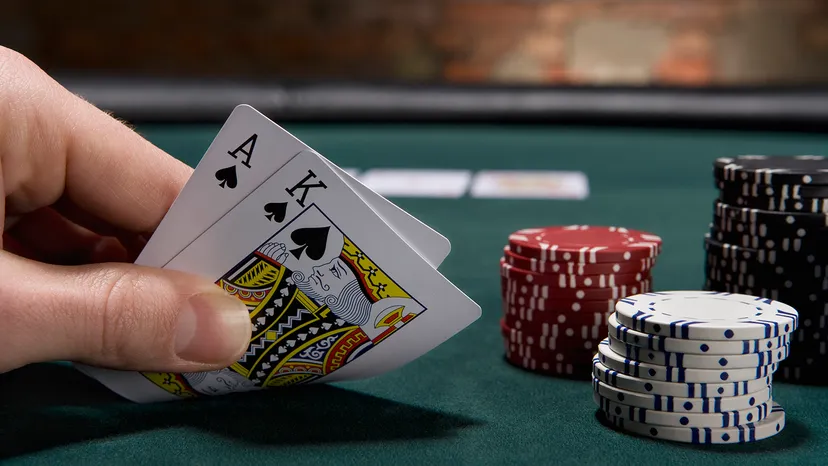
Blackjack, often regarded as the quintessential casino card game, has endured through the ages as a captivating blend of strategy, psychology, and luck. With its roots reaching back centuries, this game of chance has evolved into a global phenomenon, known for its simplicity, sophistication, and the thrill it delivers to players in casinos, online platforms, and even private gatherings. Unlike many other gambling games that rely solely on luck, Blackjack is unique in that it requires players to make decisions based on the cards they are dealt, offering an intriguing combination of skill and fate. Whether played at the bustling tables of Las Vegas or in the comfort of a home, Blackjack remains one of the most popular and enduring card games in the world.
Origins of Blackjack: A Rich History
The game of Blackjack has a long and storied history that traces back to 17th-century Europe. Though its exact origins are debated, most historians agree that it emerged from a game called “Vingt-et-Un” (French for “twenty-one”), which was played in France in the late 1600s. The game, much like its modern counterpart, involved players aiming to reach a total of 21 points without exceeding it. Over time, this game spread across Europe, with slight modifications and adaptations in various regions.
In the United States, Blackjack began to take shape in the early 19th century. It was at this time that the game began to be played in American casinos, where it was initially called “21.” As the game grew in popularity, casinos began to offer various incentives to attract players. One such incentive was a special payout for a hand consisting of an Ace of Spades and a Jack of Spades—hence the name “Blackjack.” This payout, which often offered a higher return than regular winning hands, further fueled the game’s appeal.
By the early 20th century, Blackjack had cemented its place in the gambling world. Its straightforward rules, coupled with the opportunity for players to use strategy to improve their odds, made it an instant favorite. Today, Blackjack is an integral part of nearly every casino, whether land-based or online, and continues to attract new generations of players with its combination of skill and excitement.
The Rules of the Game: Simple Yet Engaging
At first glance, Blackjack might appear deceptively simple. The objective of the game is to draw cards that total 21 or come as close to 21 as possible without exceeding that number. The game is typically played with one or more decks of cards, and each card is assigned a point value: numbered cards (2 through 10) are worth their face value, face cards (Jack, Queen, and King) are each worth 10 points, and Aces can be worth either 1 or 11 points, depending on what benefits the hand the most.
Each player is dealt two cards, and the dealer also receives two cards—one face-up and one face-down (known as the “hole card”). Players can then choose to “hit” (take an additional card) or “stand” (keep their current hand). Other options, such as “double down” (doubling the original bet for one additional card) or “split” (if the player is dealt two cards of the same rank, they can split them into two separate hands), further add to the strategic elements of the game.
What sets Blackjack apart from many other casino games is that players are not only competing against the house but also against themselves. The decision-making process is central to the game’s appeal. Unlike games of pure chance, where outcomes are dictated entirely by luck, Blackjack allows players to employ strategy, often based on mathematical principles and probabilities, to influence the outcome of the game.
The Role of Strategy: Skill Meets Luck
While Blackjack is undeniably a game of chance, it is also a game that rewards skill and strategy. Over the years, players and mathematicians alike have developed various strategies designed to maximize the odds of winning. The most well-known of these strategies is the “basic strategy,” which is a set of guidelines for when to hit, stand, double down, or split based on the player’s hand and the dealer’s upcard.
Basic strategy is grounded in probability and aims to reduce the house edge, which in turn increases the player’s chances of winning. For example, if a player is dealt a hand with a total of 12 and the dealer’s upcard is a 4, basic strategy suggests the player should stand, as the chances of the dealer busting are high. Conversely, if the player’s total is 16 and the dealer is showing a 10, the basic strategy would recommend a hit, since the odds of the dealer having a 10-value card in the hole are significant.
In addition to basic strategy, many seasoned players employ card counting techniques, which allow them to track the ratio of high cards to low cards remaining in the deck. By adjusting their bets according to the count, skilled card counters can tilt the odds in their favor. While card counting is not illegal, it is often frowned upon by casinos, who may ask suspected counters to leave or bar them from playing.
The Casino Experience: Thrills and Tactics
Blackjack has earned its place as a cornerstone of the casino experience, attracting both casual players and seasoned gamblers. The atmosphere surrounding a Blackjack table is electric, as players engage in a delicate balance of strategy, luck, and psychology. A small but important element of Blackjack is the interaction between players and the dealer, often characterized by banter, tension, and the occasional shared moment of triumph. The dealer, often seen as the house’s representative, can also influence the pace of the game, creating an exciting rhythm that adds to the overall experience.
Casinos typically offer a variety of Blackjack variants to appeal to different player preferences. While the traditional 21-game remains the most popular, other versions such as Spanish 21, Double Exposure, and Blackjack Switch introduce unique twists to the gameplay. These variants often offer different rules regarding payouts, card values, or betting strategies, which adds another layer of excitement for both new and experienced players.
In addition to land-based casinos, online Blackjack has experienced an explosion in popularity in recent years. Virtual tables allow players to enjoy the game from the comfort of their homes, with many platforms offering live dealer Blackjack, where real dealers interact with players in real-time via video streaming. These online formats have opened up new opportunities for players who may not have access to traditional brick-and-mortar casinos, further solidifying Blackjack’s global presence.
The Psychology of Blackjack: Mental Acuity and Emotional Control
Another compelling aspect of Blackjack is the psychological component. The game requires not only mental acuity but also emotional control. Players must stay focused, avoid making impulsive decisions, and keep their nerves in check, especially when the stakes are high. The ability to read the dealer’s actions and subtly gauge the other players’ behavior can also play a significant role in the overall strategy.
The emotional highs and lows that come with playing Blackjack—whether it’s the excitement of a winning streak or the frustration of a bust—add a layer of complexity to the game that few other casino games can replicate. Maintaining a level head is crucial, as rash decisions based on emotion rather than strategy can quickly lead to losses. The true master of Blackjack is not only someone who understands the numbers but someone who can keep their emotions in check while executing their strategy with precision.
Conclusion: The Enduring Appeal of Blackjack
Blackjack is a game that has stood the test of time, evolving from its European origins to become a global phenomenon that continues to captivate millions. With its blend of simplicity and depth, chance and skill, it remains a game that players return to again and again, drawn by the thrill of the challenge and the satisfaction of a well-played hand. Whether in a luxurious casino, at a private gathering, or online in the digital realm, Blackjack offers a timeless appeal that is unlikely to fade. It is a game of strategy, skill, and, above all, the exciting possibility that the next card could turn the tide in favor of the player.